
In a trades business the phone rings at the worst moment. You are under a sink, on a roof or at a customer's fuse box, and you cannot pick up. The caller does not leave a message. They ring the next name on the list. Every missed call is a job that might have been yours.
An AI receptionist answers those calls, talks to the caller in natural language and turns the conversation into something you can act on. This article covers what is specific to plumbers, HVAC technicians, electricians and other home-service trades. For the general picture, read AI receptionist for small business.
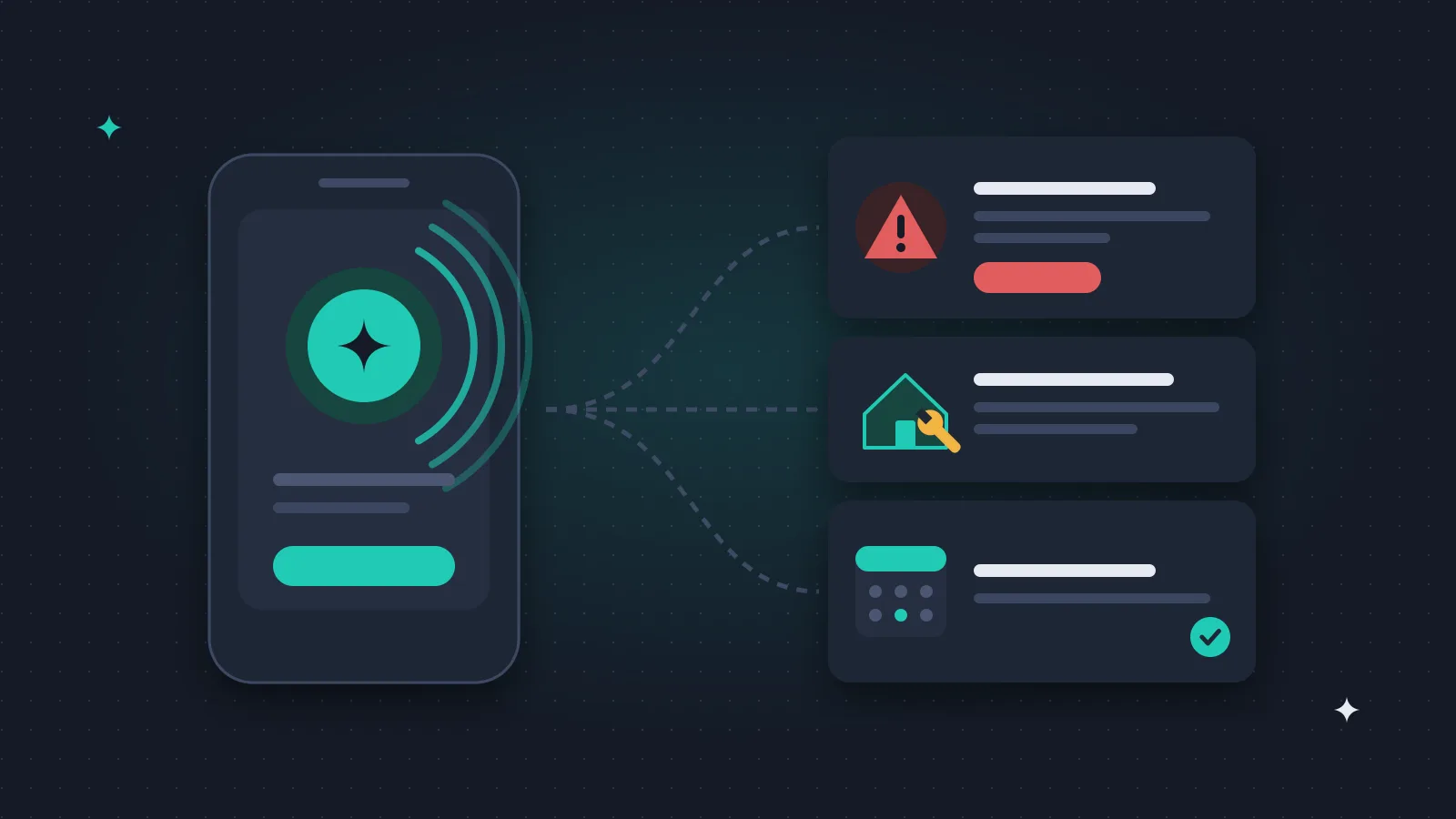
The three kinds of calls you get
- Emergencies: a burst pipe, no heating in winter, no power, a gas smell. Speed matters more than anything.
- New jobs and quotes: a boiler service, a new socket circuit, a bathroom refit. These are worth money but can wait an hour.
- Existing customers: "When are you coming?", "Can we move Thursday?", "Did you get my photos?"
A good AI receptionist treats these three very differently, and that is most of the set-up work.
What it should do with each
Emergencies
- Recognise the emergency from what the caller says.
- For a gas smell or anything dangerous, give the safety instruction you have approved and tell the caller to call the gas emergency line or the emergency number first.
- Collect address, callback number and a short description.
- Alert the person on call immediately by call or text, not just by email.
New jobs and quotes
- Take the job type, address or postcode, preferred times and how the customer found you.
- Check whether the address is inside your service area.
- Send the caller a text with a link to upload photos, which saves a site visit for many quotes.
- Book a visit straight into your calendar if you allow it, or create a job in your job management software or CRM.
Existing customers
- Look up the booked visit and confirm the time window.
- Move or cancel appointments within the rules you set.
- Take a message for anything else and pass it to the right person.
What it should not do
- Give firm prices for custom work. A price range for a standard service is fine if you set it. A binding quote is not.
- Diagnose faults. "It sounds like your pump" belongs to the technician.
- Promise arrival times you cannot keep. Let it offer real slots from your calendar only.
- Pretend to be a person. One short opening line that it is an AI assistant is enough, and in the EU it is required under the AI Act from August 2026.
Ready-made tool or custom set-up?
If you are a small team using a common calendar or field-service app, a ready-made AI receptionist with that integration is often enough. Start there.
A custom set-up makes sense when calls must follow your own rules: different on-call engineers by area or day, priority customers with service contracts, quotes that need to pull prices from your own list, or calls in several languages. The voice is only the front door; the value is in the AI system behind it.
Before you switch it on
- Write down your rules: service area, opening hours, what counts as an emergency, who is on call.
- Write the answers to your ten most common questions. The AI should answer from these, not invent its own.
- Start with after-hours and overflow calls only. Let your office or your own phone take the rest at first.
- Read the transcripts every week for a month and adjust the rules.
- Measure: missed calls before and after, jobs booked by the AI, emergencies passed on and how quickly.
A quick way to see whether it is worth it: count last month's missed calls, estimate how many would have become jobs, and multiply by your average job value. If that is more than the monthly cost of the tool, try it.
Summary
For plumbers, HVAC technicians and electricians, an AI receptionist pays off when missed calls cost you jobs. Set it up to treat emergencies, new jobs and existing customers differently, keep prices and diagnoses with your team, and start with after-hours calls. If you want a second opinion on your set-up, tell me how your calls work today.