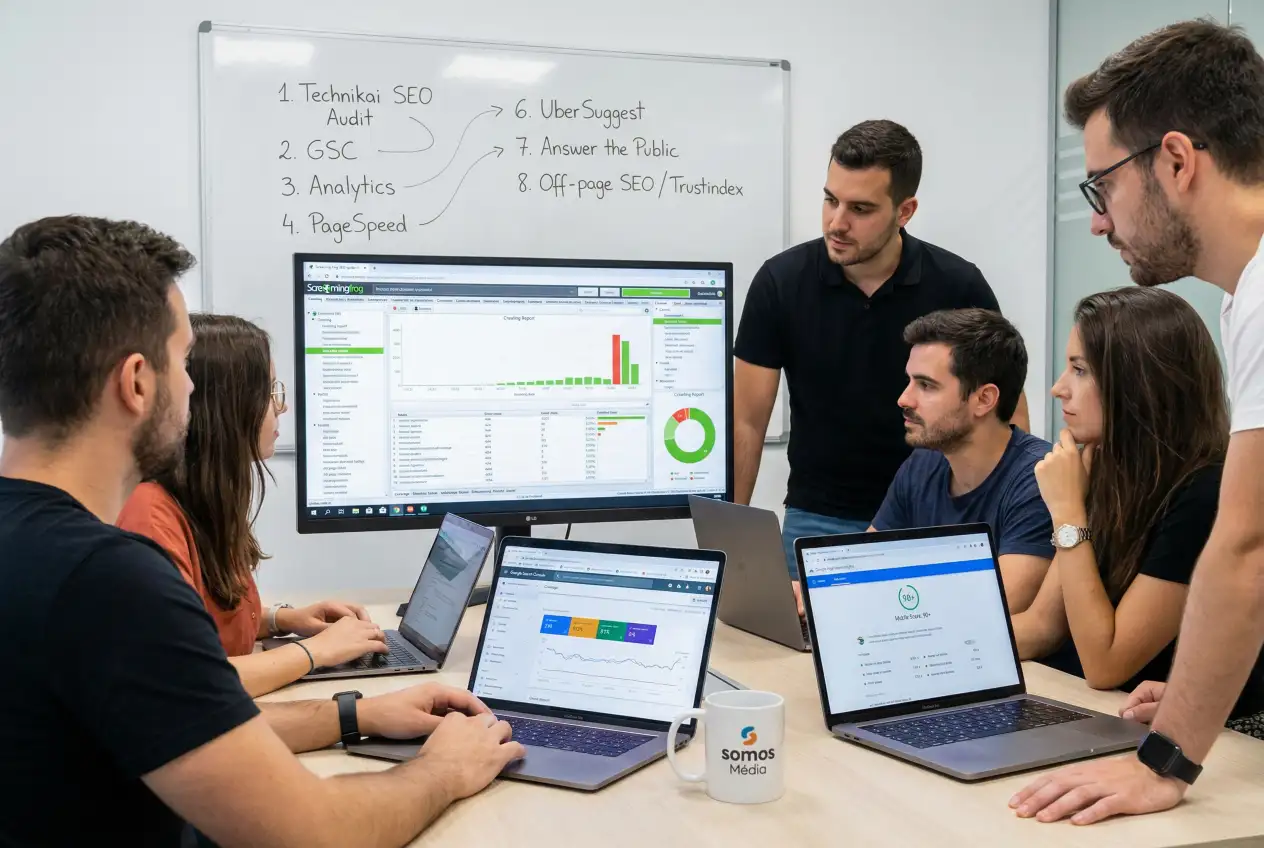
When a new client approaches us with problems regarding their website—be it lack of traffic, pages disappearing from Google, or simply that "SEO isn’t working"—we don’t start with guessing.
At our company, search engine optimization is always a structured, step-by-step process that begins with addressing technical and content-related issues. In this article, we will show you what SEO tools we use in our daily work and what steps you should take if you truly want to achieve results.
Step 1: Technical SEO Audit with Screaming Frog
The first tool we reach for in almost all cases is the Screaming Frog SEO Spider. With this, we can crawl the entire website, and it quickly reveals any fundamental technical problems:
- 404 errors and other broken pages
- faulty or chained redirects
- missing or duplicate meta titles and descriptions
- canonicalization issues
- broken internal links
Why do we start with this? Because as long as these errors exist, any further SEO work is just a temporary fix.
Tip: Don’t just create content while your site is filled with technical errors. First, clean everything up with Screaming Frog, and only then build further.

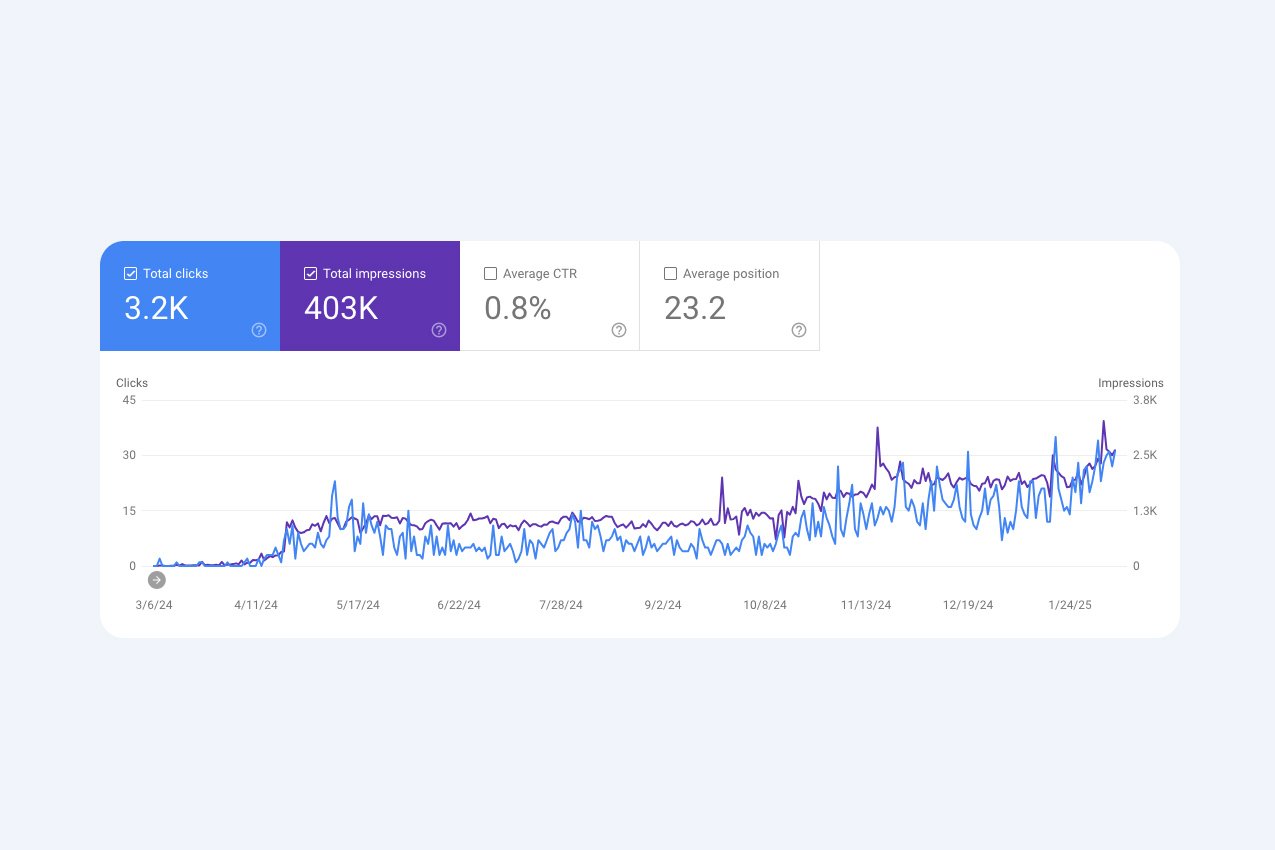
Step 2: Google Search Console and What Google Sees
The next stop is the Google Search Console. Here we examine how Google views and interprets the website. The most important checks include:
- whether the sitemap is uploaded
- if the robots.txt is properly configured
- which pages are indexed
- which are not, and why
- if there are coverage or manual errors
- A very common issue is that a page is fine content-wise, but technically it’s not accessible to Google.
Tip: Don’t just refine meta descriptions and title tags without knowing if the page is even indexed. First, check Search Console, then move on to everything else.

Step 3: Google Analytics and Analyzing User Behavior
Once we know that the site is technically sound and indexable, we look at what visitors are doing on it. For this, we analyze the data from Google Analytics. What we examine at this stage includes:
- how long visitors stay on the site
- which pages have a high bounce rate
- where users exit the site
- how many land on 404 pages
- internal searches (if there is a search function on the site)
These data points show very clearly where the user experience breaks down.
Tip: Don’t just look at visitor numbers. Pay attention to what visitors are doing and where they encounter issues.

Step 4: Checking Load Speed with Google PageSpeed
A slow website is not only an SEO problem but also a business one. That's why an analysis with Google PageSpeed Insights is part of every audit. Here we focus especially on:
- mobile and desktop load times
- Core Web Vitals scores
- image sizing errors
- render-blocking elements
Step 5: Reviewing the Admin Panel
We also log into the website’s control panel (e.g., WordPress) and review:
- outdated or faulty plugins
- SEO-related settings
- any signs of duplication
It often turns out that a bad admin setting has been holding back the site for months.
Step 6: Keyword Research Using Ubersuggest
After establishing the technical foundations, we move on to content. For keyword research, we frequently use the Ubersuggest tool. Here we verify:
- whether the site is optimized for the keywords people are actually searching for
- if the service and product pages are appropriately structured
- where there are untapped opportunities

Step 7: Finding Blog Topics with Answer The Public
One of our favorite tools for finding blog topics is Answer The Public. Its strength lies in showing real questions that people are genuinely asking. By providing answers to these questions, you:
- drive relevant traffic to the site
- help visitors
- build your professional credibility
Tip: Don’t blog just for the sake of having fresh content. Answer specific questions, solve specific problems.

Step 8: Off-Page SEO and External Affirmations
SEO doesn’t stop with the website. Important elements include:
- backlinks
- brand mentions
- expert guest articles
- reviews
Properly filling out the Google Business Profile, as well as social media platforms and review sites, is a basic requirement. We also connect the reviews to the website so that every credibility marker appears in one place.
Summary
The quality of online visibility depends on many factors, and of course, there can be even deeper levels to explore. However, we consider this process a fundamental approach for every website.
These basics can be learned by anyone with a few weeks of study, but achieving real results requires experience and systemic thinking.
If you need consulting or implementation services, feel free to reach out to us.
Your first website audit with us is free.
About the author

Balint Somos is a digital growth expert and the founder of Somos Media, a strategy-driven SEO and content marketing agency focused on digital brand building and measurable, human-centred online growth.
Enjoyed this article?
Let's talk about your project.
Let's look together at where the biggest opportunities are on your website. The first audit is free and with no obligation.