
Lately several clients have asked me whether SEO is still worth the money when everyone seems to ask ChatGPT instead, and Google increasingly answers the question itself. My short answer: yes, it is, but not in the same way as five years ago. In this article I describe what I see changing in our own data and our clients' data, and where I would put the money today if I were in your position.
What has actually changed?
The biggest change is that informational questions are more and more often answered right on the results page or in an AI interface. Someone searching for "what is technical SEO" often doesn't click anywhere, because they already got what they wanted.
I see this in our own Search Console data too. Our general explainer articles get plenty of impressions but comparatively few clicks. The pages that answer questions people ask right before a decision (how much does it cost, how long does it take, how do I choose) bring far more clicks in proportion, and that is also where enquiries tend to come from.
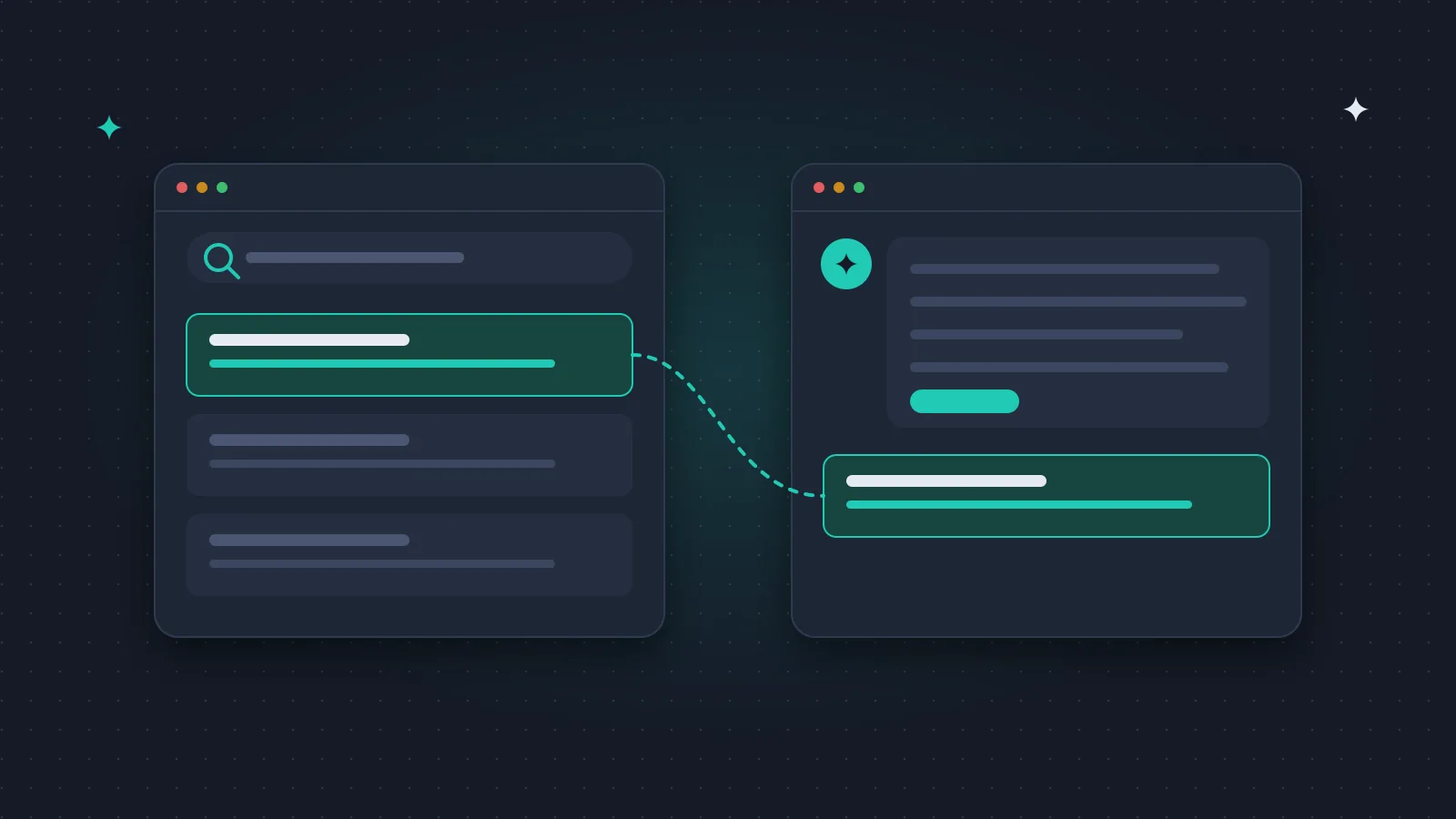
The second change is that visibility is no longer only about blue links. If an AI answer mentions you as a source, that is worth something even without a click: the person remembers your name and may search for you later.
The third is that the sources AI answers cite are mostly pages that already rank well in traditional search. In other words, classic SEO hasn't disappeared. It has become the foundation of AI visibility.
Where I would spend the money today
1. Pages that answer pre-decision questions
Not "what is..." articles, but the questions a buyer asks just before deciding. What does it cost, how long does it take, what is included, what is the difference between two options, what should I look for when choosing a provider. In our own knowledge base this is where we put the emphasis.
2. Your service pages
At many companies the blog is more detailed than the service page itself. That's the wrong way round. The service page should be the one that explains most precisely who you work for, what you do, how you do it, and what the next step is.
3. A structure AI can quote from
Question-style subheadings, a one or two sentence answer directly underneath, and only then the details. Specific, verifiable facts instead of generic adjectives. Structured data (FAQ, service, organization). I wrote about this in more detail in the article on AI search optimization.
4. Technical basics, especially on JavaScript sites
Speed, mobile usability, indexability. If your site is built with JavaScript, you need to check separately whether crawlers actually see the text. We periodically fetch every page of our own site as Googlebot and check that the content is there in the HTML. Most companies never look at this.
5. Credibility
Google and AI systems both want to know who wrote something and how they know it. A real author, real projects, real reviews. That's why I write our knowledge base from our own experience and our own projects rather than generic descriptions.
What I would not spend money on
- Lots of near-identical pages where only the city name or a keyword changes. We considered this for our own site and decided against it, because it gives visitors nothing new and search engines are getting better at filtering it out.
- Mass-produced, generic AI articles. There are more of these than anything else, which is exactly why they are worth the least.
- Cheap link packages. Suspicious links do more harm than good.
- Ranking reports that show no business result. A position is a tool, not the goal.
How to tell if it's working
- Search Console: impressions and clicks on pre-decision queries, page by page.
- Branded searches: if more people search for you by name, that is one of the best signs of AI mentions.
- Traffic from AI sources in your analytics (chatgpt.com, perplexity.ai, Gemini).
- Enquiries: in the end, this is what counts. A "how did you hear about us?" field on the form tells you a lot.
One caution: don't take click numbers at face value on their own. We have had periods where part of our clicks did not come from real visitors. So we always look at Search Console, analytics and actual enquiries together.
Summary
SEO is still worth it in 2026, but it has to be done differently: fewer, better pages, focused on pre-decision questions, with a quotable structure and real experience behind them. If you are working the same way you did in 2020, you are probably getting less for your money. If you adapt, search and AI answers together can bring you enquiries.
If you want to know where your biggest untapped potential is, send me your website address and I'll take a look. You can read more about our SEO services here.