SEO
Is Your Website Traffic Falling? Discover the Cause and Stop the Decline
 Marcell Gál November 13, 2025
Table of Contents

When your website's traffic suddenly drops, I know how unsettling that can be, both as an expert and as a person. However, there is usually a tangible reason behind the organic decline, and we can find it together. In this article, I won’t promise a perfect solution, but rather a realistic, personal approach: I will show you how I tackle diagnosis, what I pay the most attention to, and how to gradually reverse the downturn into stable growth.
Quick Diagnosis: Type and Extent of Decline
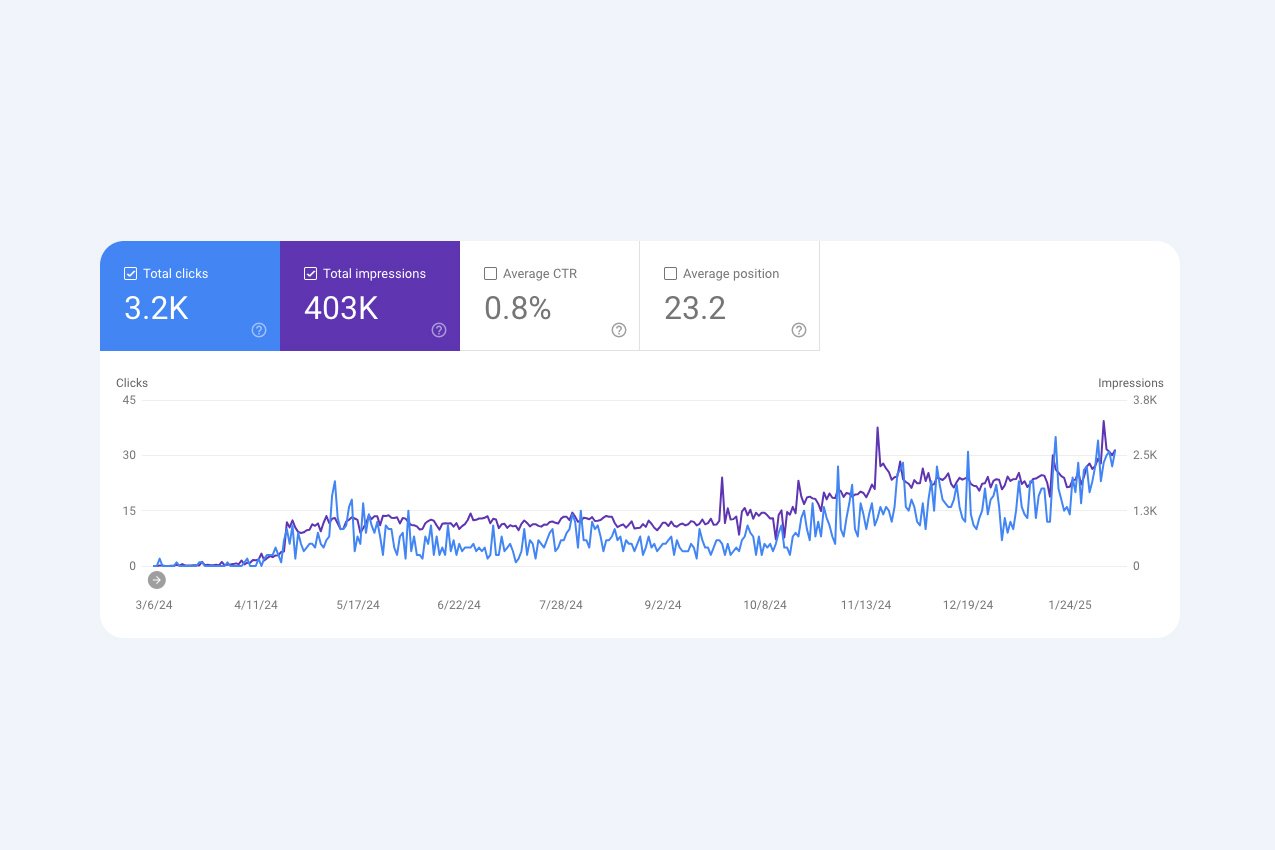
Search Console → Performance view:
- Period comparison: I always compare the 14 days prior to the update with the 14 days following the update, as this reveals the most accurate change.
- Impressions vs. Clicks: If the impressions have dropped, it generally indicates a ranking issue; however, if the CTR falls, it often means there are problems with the title, meta, or intent mismatch.
- Where does the decline appear? I examine the Web/Image/Video/News views separately, as often only one surface is affected, which tells us a lot about the nature of the problem.
- Small or large drop? Movement between 2→4 rankings is typically normal fluctuation, but when I see a drop from 4→20+, that’s a clear sign that a deeper content or technical investigation is needed.
Timing and Updates: When Did the Decline Start?
Note the first day of the decline, and check if it coincided with a broader algorithm update or spam update. The pattern will help determine whether the issue is site-wide (e.g., trust, quality) or URL-level (e.g., intent mismatch).
The Six Most Common Causes
When looking for reasons behind the decline, there are several signs that almost instantly clarify the direction of the problem. These typical patterns have emerged repeatedly over the years across various projects—if any of these appear, that’s already half a diagnosis.
- People-first deficiency: It often happens that content becomes formulaic, overly keyword-focused, and gives off an "SEO smell." Usually, there is little genuine, unique value in such cases.
- E-E-A-T weakness: If I don’t see the author or expert noted, company information is vague, or authoritative references are missing, that signifies a loss of trust for Google as well.
- Intent mismatch: Often, the promise in the title does not reflect what the content actually delivers. This mismatch with user intent can lead to significant drops in both CTR and rankings.
- Outdated content: If the article contains old information, hasn’t been updated in over 12 months, or lacks visual elements, it can easily fall behind fresher competitors.
- Technical issues: One of the most common underlying causes of performance drops. This includes crawling errors, indexing problems, Core Web Vitals deviations, mobile UX issues, canonicalization problems, and 404/301 redirect chains.
- Link profile reassessment: When weak or irrelevant backlinks lose their weight, or internal linking is insufficient, the authority of the page can also weaken, leading to a decline.

Technical Checklist
When assessing the technical state, I always try to quickly clarify whether there are any basic errors that could hinder performance. These are the points where even the smallest deviation can have measurable effects, so I regularly check the following:
- Indexing: I check the Coverage report to ensure no important URLs have accidentally been noindexed, and that there are no robots.txt disallow rules blocking crawling.
- CWV (Core Web Vitals): I review the LCP, CLS, and INP thresholds, paying particular attention to mobile results, as performance issues often show up here first.
- Canonical tags: It’s crucial to have clear canonical tags everywhere and to avoid duplicate versions that could confuse Google.
- Internal 404/301 errors: Short, clean redirect paths help maintain stable crawling and prevent slowdown.
- Schema markups: Where relevant, I use structured data like FAQ, Product, Article, or LocalBusiness as these support search visibility.
- Language tags: For multilingual systems, I pay special attention to the correctness of hreflang pairs and consistent URL structures to avoid displaying incorrect versions.
Content and E-E-A-T Development
In content development, I always look for ways to make a page more credible, valuable, and clear to the user and Google alike. Here are the aspects I review every time I investigate a content or E-E-A-T-based decline:
- Author credibility: It's vital to display the author’s name, professional bio, relevant references clearly, and to show the content’s last updated date as well. Together, these establish the foundation for trust signals.
- Unique value: I always recommend using your own data, case studies, images, videos, or charts. These elements provide real differentiating power to the content.
- Structure: Clear H2/H3 headings, tables, lists, and shorter paragraphs not only improve the user experience, but also help Google understand the content.
- References: It's worth citing reputable manufacturer or statistical sites, as these enhance professional credibility.
- Local signals: If relevant, the address, phone number, opening hours, and map display all contribute to local trust signals.
- Page-level goal: Each URL should serve a single primary search intent. If a page tries to cater to multiple directions, Google will perceive it as ambiguous.
Link Profile and Internal Linking
In examining internal and external linking, I always focus on how I can provide stronger thematic signals to Google. Here are a few critical points that are essential in every recovery process:
- Topic clusters: It’s advisable to establish a clear structure where supporting articles link to a central pillar article. I typically use 3–8 internal links per article to ensure the thematic weight is evident.
- Anchor texts: The phrasing of internal links should be natural and varied; relying solely on exact match can often weaken rather than strengthen signals.
- Fresh backlinks: Partnerships, press mentions, industry directories—these are all valuable if they are of high quality. However, weak sources should be avoided, as they can easily pull the page down.
- Orphan pages: I regularly identify URLs that receive 0-1 internal links. I always reconnect these to the content structure so Google can better build upon them.

30–60–90 Day Recovery Plan
0–30 Days: Diagnosis and Quick Wins
- Analyze the top 10 fallen URLs: During this time, I review queries, position changes, and the evolution of CTR in detail, as these provide the clearest insights into where the decline began.
- Refine titles and meta descriptions: I align them with actual search intent so that users get exactly what they are looking for—this often improves CTR on its own.
- Fix critical technical issues: I first clarify indexing problems, Core Web Vitals metrics, canonical tags, and 404 errors, as any of these can independently impact organic performance negatively.
- Partially update 3-5 key URLs: I refresh the data, visual elements, and references on the most important pages to quickly make the content relevant and up-to-date again.
31–60 Days: Deep Content Development and E-E-A-T
- Establish pillar + cluster structure: I build pillar pages around main topics and then associate cluster articles with them. This structure provides clear thematic signals for Google.
- Publish author profiles and guidelines: This is when the author introductions, editorial guidelines, and referencing policies are created. Together, they strengthen E-E-A-T signals and clarify content origins.
- Rewrite or expand 5-10 supporting articles: I update related articles and then connect them through internal linking to showcase the content relationships and depth of the topic.
61–90 Days: Authority and Fine-Tuning
- Natural backlink campaign: In this phase, I create content such as case studies or data visualizations because these types tend to garner more references from other sites. This is one of the safest ways to gain authoritative backlinks.
- SERP comparison: I compare the competitor contents appearing in the search results and check where there are content gaps. I specifically fill these missing elements to cover every relevant search intent for the page.
- CTR tests and optimization: Testing title variants, optimizing images and alt text, and expanding structured data help ensure that the page not only ranks well but also achieves a higher click-through rate.
Measurement Framework
- Leading indicators: These include impressions, average position, the number of indexed URLs, and Core Web Vitals metrics. They provide the first early signs that interventions are working.
- Lagging indicators: Organic clicks, conversions, and revenue follow changes more slowly, but these reveal the ultimate, real results.
- Timing: After any major modification, it’s wise to wait at least a week and then compare data on a weekly basis. This is necessary to draw conclusions based on long-term trends rather than short-term fluctuations.

If you follow the steps outlined in this article—from diagnosis to content and technical fixes, to strengthening E-E-A-T and the 30–60–90-day recovery plan—you will truly be following the same path I take in client projects. This process is data-driven, transparent, and proven: it first stabilizes organic performance, then gradually rebuilds visibility and key metrics. If you consistently apply every point, impressions, positions, CTR, and ultimately conversions will improve over time—because search engines reward precisely what they value: a technically sound, thoughtful, credible website that delivers real value.
Can We Help?
If you are feeling uncertain due to the traffic decline, you don’t have to struggle with it alone. We can help you gain clarity on what caused the issue and how to methodically repair it. If you don’t know what steps to take, we can assist.
Frequently Asked Questions
- Is my website traffic declining? What’s the first step? Open the Performance report in Search Console, compare two consecutive two-week periods, and separate whether it’s a ranking drop or a CTR decrease.
- How do I know if an algorithm update caused the problem? Check the exact starting date of the decline and compare it with official update dates. If the decline is site-wide and the timing matches, there’s likely a connection.
- When can I expect to see improvements after modifications? Minor changes can have effects within a few days, but reevaluation of content and trust signals might take weeks to months to rebuild.
- Is it advisable to bulk-delete weak content? Only as a last resort. Try updating, expanding, and clearly focusing on search intent first. Deleting is wise only if the page is irredeemable.
- How can I quickly enhance credibility? Clearly display authors and their professional backgrounds, supplement your articles with references to credible sources, and make company/contract details visible.
- How does internal linking assist in recovery? It provides thematic signals to search engines, improves crawlability, and distributes authority among important URLs.
About the author
Web development, e-commerce and SEO: I support our partners on their online growth journey. I help businesses stand out and grow by building human-centred digital experiences that rank well in search results and effectively drive conversions.
Free website auditby email within 24 hours
Our team reviews your website and emails you what's worth fixing within 24 hours. Speed, SEO, conversion, technical issues. No fluff, just concrete next steps.
- PageSpeed and technical analysis
- SEO issues and opportunities
- Conversion recommendations, prioritized
Would you rather talk about your project?Let's talk